
A Guide to the Best Use of Vibe Coding in Your Business
 Read Time: 9 minutes
The appeal is obvious—speed, accessibility, and radically lowered effort.
But as real-world results roll in, it’s becoming clear that while vibe coding is a catalyst for exploration, it's a dangerous shortcut for production, especially without oversight.
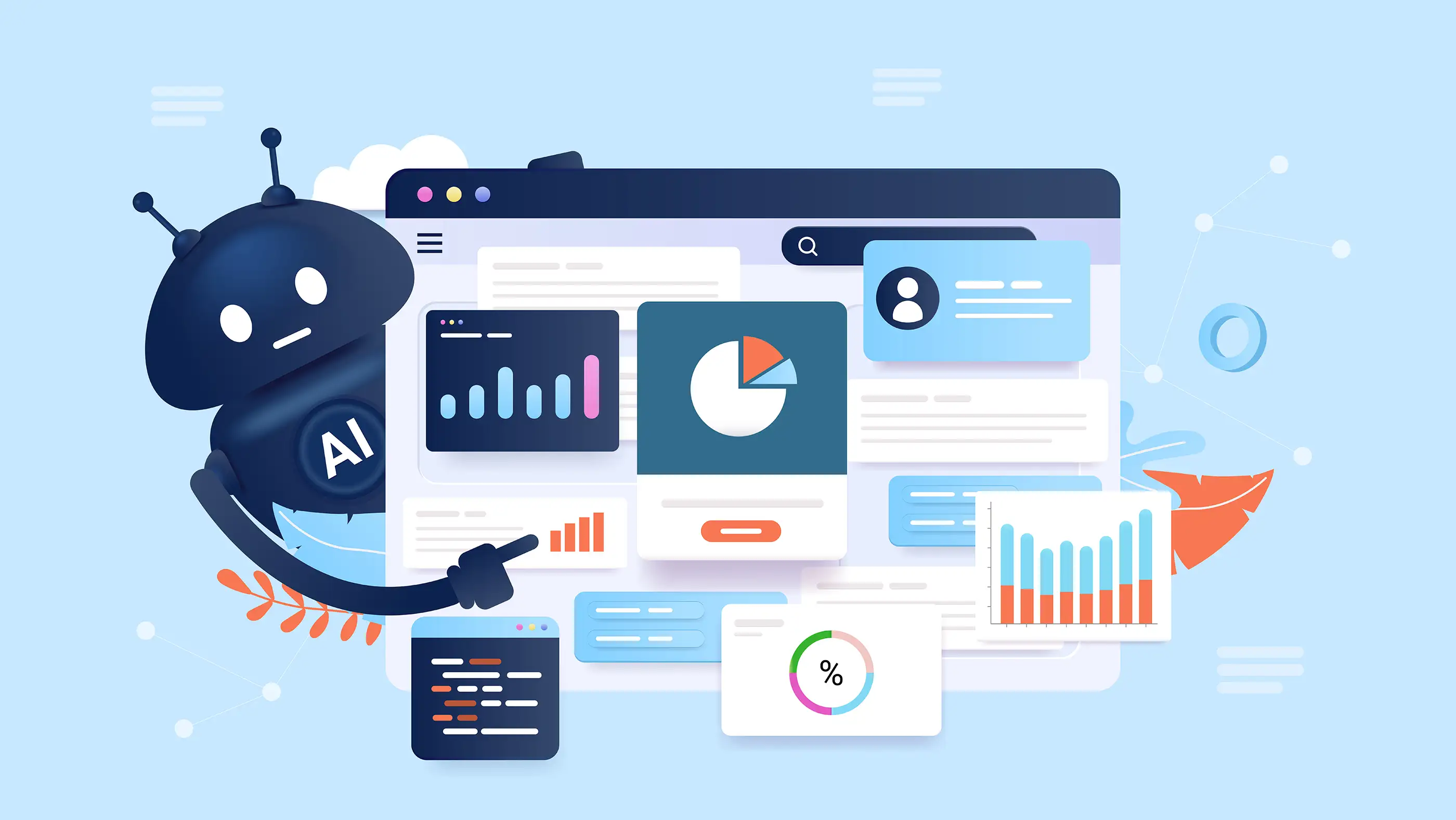
The name is catchy, the definition fuzzy, and the merit hotly debated. We are speaking, of course, about vibe coding, the practice of generating software code using natural-language prompts fed into an AI model with minimal engineering oversight.
With AI being one of the fastest-growing markets in the world, there’s no shortage of people eager to hype its potential. Influencers, product makers, and subscription providers are just a few of those who stand to profit off of rapid adoption. And what’s more appealing than the promise of custom software at a radically lowered effort and price point?
In this article, we’ll look at some of the ways in which vibe coding can be successfully used in the production of software and some of the ways in which it falls far from the mark.
But First, What Exactly Is Vibe Coding?
Vibe coding currently means different things to different people. To developers, it can mean using AI tools to “see where the wind takes you” or “get in the creative flow” to the point where the underlying code fades from view. It means taking a model’s suggestions at face value and prioritizing rapid, iterative experimentation without deliberate review.
To non-technical people, it means suddenly having access to the world of coding without learning programming languages, data structures, or system architecture. It means plugging requests into a conversational interface and assuming the impressive-looking results are fully functional.
The important difference here is that a developer can review the code that is produced and identify serious problems, whereas a non-technical user won’t have any idea what might go wrong or how to mitigate it.
The reality is that experienced developers know the code produced this way is almost always unscalable, impossible to debug, and extremely fragile. Professional engineers should not be “vibing” their way to production code. In a previous article, we drew a clear line between using AI-assisted coding tools to amplify a developer’s productivity and handing off full code creation to an AI model.
So why all the hype?
How Should Professional Developers Use Vibe Coding?
Vibe coding provides a shortcut between an idea and something that is clickable. A prompt can quickly become a prototype. The cost of trying out different variations drops significantly, and because the feedback loop tightens, teams can validate assumptions with stakeholders far earlier. Used this way, vibe coding is a high-leverage discovery tool: it accelerates exploration, interaction testing, concept comparison, and early-stage alignment.
But developers aren’t the only ones who might be interested in playing around with ideas and creative concepts. What about uses for entrepreneurs and business owners?
How Should Non-Technical Business Leaders Use Vibe Coding?
The exciting thing about a lowered barrier to entry is that it broadens who gets to experiment. Non-technical leaders can use vibe coding as a way to explore ideas without waiting on a formal development cycle. They can sketch out product concepts, generate simple prototypes, and compare variations.
For leaders accustomed to relying on others to translate their thinking into software terms, this shift is liberating. It shrinks the distance between their ideas and something tangible, helping them refine direction early while keeping experimentation lightweight and low-stakes.
The key is to remember that the results are only a starting point. If you want to build something truly functional, you need to get professionals involved. Good professionals will use what you built as a reference point, not as something they could tweak or build off of. To put it bluntly: software built entirely by AI is spaghetti code (software that works but is built in a tangled, disorganized way, making it hard for anyone to understand, fix, or safely change without causing new problems). It’s a bad foundation, and trying to make it work will drown you in technical debt. But you don’t have to take our word for it.
Cautionary Tales From Technical Leaders
Business leaders across industries are experiencing firsthand how vibe-coded products can fail. In a recent survey of 18 CTOs, 14 described vibe coding as “creating more long-term problems than short-term benefits.” Here are some of the issues they ran into:
Codebases that resist extension or refactoring
Vibe-coded foundations were untestable, insecure, or structurally incoherent.
Mikhail Hryb, Senior Full Stack Engineer at Akveo, described a project built almost entirely through vibe coding as “a disaster.” He says, “The code technically worked, and the MVP got delivered fast, two days instead of a week. But no one reviewed what the AI generated. When juniors write messy code, at least it’s readable. With AI-generated code and no oversight, the result was nonsense. It was impossible to debug, hard to extend, and painful to maintain.”
Performance bottlenecks
Code that appeared functional in small tests collapsed under real traffic because the underlying architecture was never sound.
Ritesh Joshi, CTO at LetSetGo, shares that “using an AI to generate a database query produced code that was syntactically correct but woefully inefficient. It worked for a small dataset, but as soon as real-world traffic hit, the system slowed to a crawl. The bug wasn’t in the code’s syntax, but in its fundamental architecture.”
Security risks
Opaque AI-written code hid serious vulnerabilities.
Patric Edwards, Founder of Cirrus Bridge, lived every business owner’s nightmare: discovering a serious security flaw after launch. He relates that a junior developer “used a combination of AI code suggestions and Stack Overflow snippets to ‘vibe’ their way through building a user permission system. It worked in development, passed tests, and even survived initial QA.”
However, two weeks after launch, Edwards says that the consequences became clear: “We discovered that users with deactivated accounts could still access certain backend tools because the access logic was built on an inverted truthy check that ‘seemed to work at the time.’”
Poor ROI
Teams ended up reverse-engineering vibe-generated logic, spending more time deciphering it than they would building clean solutions from scratch.
The security flaw mentioned above took an expert two days to sort out. Edwards observed that this “puts pressure on your senior engineers to be permanent code detectives, reverse-engineering vibe-driven logic just to ship a stable update.” He goes on to note, “Vibe coding might get you across the finish line once or twice, but in the long run, it creates systems that break in slow, subtle, and expensive ways.”

How Can Your Business Use Vibe Coding Successfully?
Startup CTO Joseph Leung put it this way: "Vibe coding is an excellent method for advancing an idea from 0 to 0.7. However, there are numerous pitfalls to be aware of, particularly if it becomes the primary method of code generation."
Real trouble starts when vibe coding is treated as a substitute for engineering. When teams attempt to ship vibe-coded systems, they will end up firefighting unpredictable behaviors, performance cliffs, and security exposures. Production software requires reliability, resilience, clarity, and long-term maintainability—qualities that cannot be added retroactively.
Use vibe coding for its strength as a frontloaded catalyst rather than a development shortcut. Use it to generate rough prototypes. Play around with ideas, get creative. Treat those outputs as design references, not production assets. Bring engineers in early to assess feasibility, redesign the architecture, and build a proper foundation. Maintain firm engineering ownership of anything that moves beyond exploration. This approach preserves vibe coding’s superpower—speed—without inheriting liabilities that will undermine the product later.
TL;DR
- Vibe coding is generating software code from natural-language prompts with minimal engineering oversight.
- Developers use it to rapidly prototype, test interactions, compare concepts, and align early—then switch to deliberate engineering for anything real.
- Non-technical founders can use vibe coding to explore and compare ideas, but treat the output as a starting point and involve professionals to build the real system.
- When teams ship the output, tales of vibe-coded disasters abound: systems that prove hard to extend, slow under load, vulnerable, and expensive to untangle.
- Use it as a frontloaded catalyst for exploration, keep engineering ownership early, and build production software intentionally rather than trying to ship vibe-generated code.

We are custom software experts that solve.
From growth-stage startups to large corporations, our talented team of experts create lasting results for even the toughest business problems by identifying root issues and strategizing practical solutions. We don’t just build—we build the optimal solution.
From growth-stage startups to large corporations, our talented team of experts create lasting results for even the toughest business problems by identifying root issues and strategizing practical solutions. We don’t just build—we build the optimal solution.